Ownership
A wall outlet is enough.
Electric motorcycles are simpler to charge than most people expect. Both Luna and Vera draw from any standard North American household outlet. No electrician, no dedicated circuit, no new wiring.
Plug in overnight and it is ready in the morning. Public Level 2 chargers (the same connectors electric cars use) are supported for faster top-ups while you are out. Actual charge times depend on the bike and the battery state when you plug in.
Less routine maintenance. Clear support.
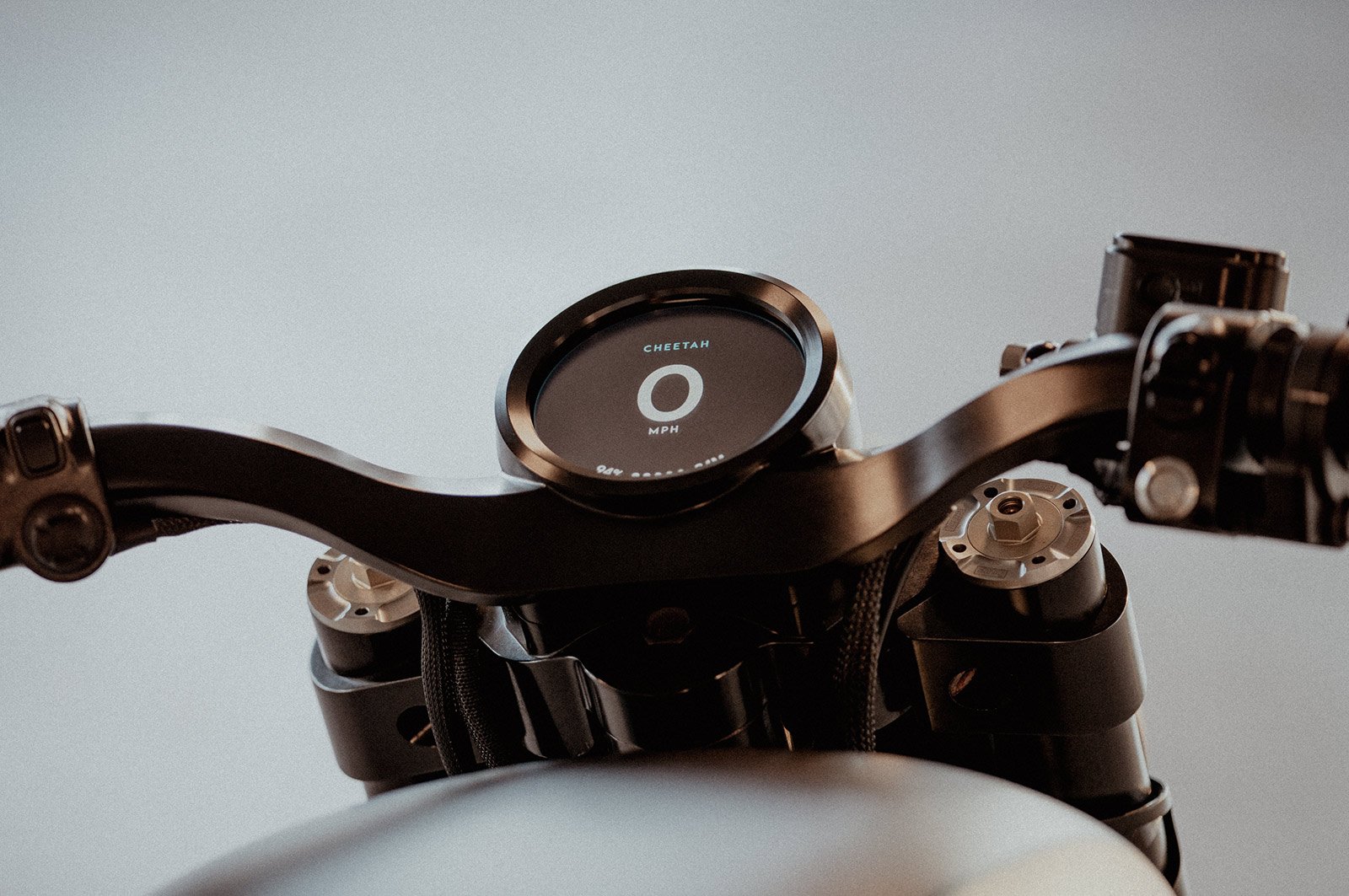
An electric drivetrain removes most of the routine maintenance of a combustion bike: no oil changes, no clutch adjustments, no valve inspections, no chain lubrication. What remains (belt, brakes, tires, suspension, software) is simpler and less frequent.
When something is needed, the on-board log usually tells us before you do. We resolve what we can over the air, and when a part needs replacing we source a local service provider and coordinate the work with them directly.
24 months.
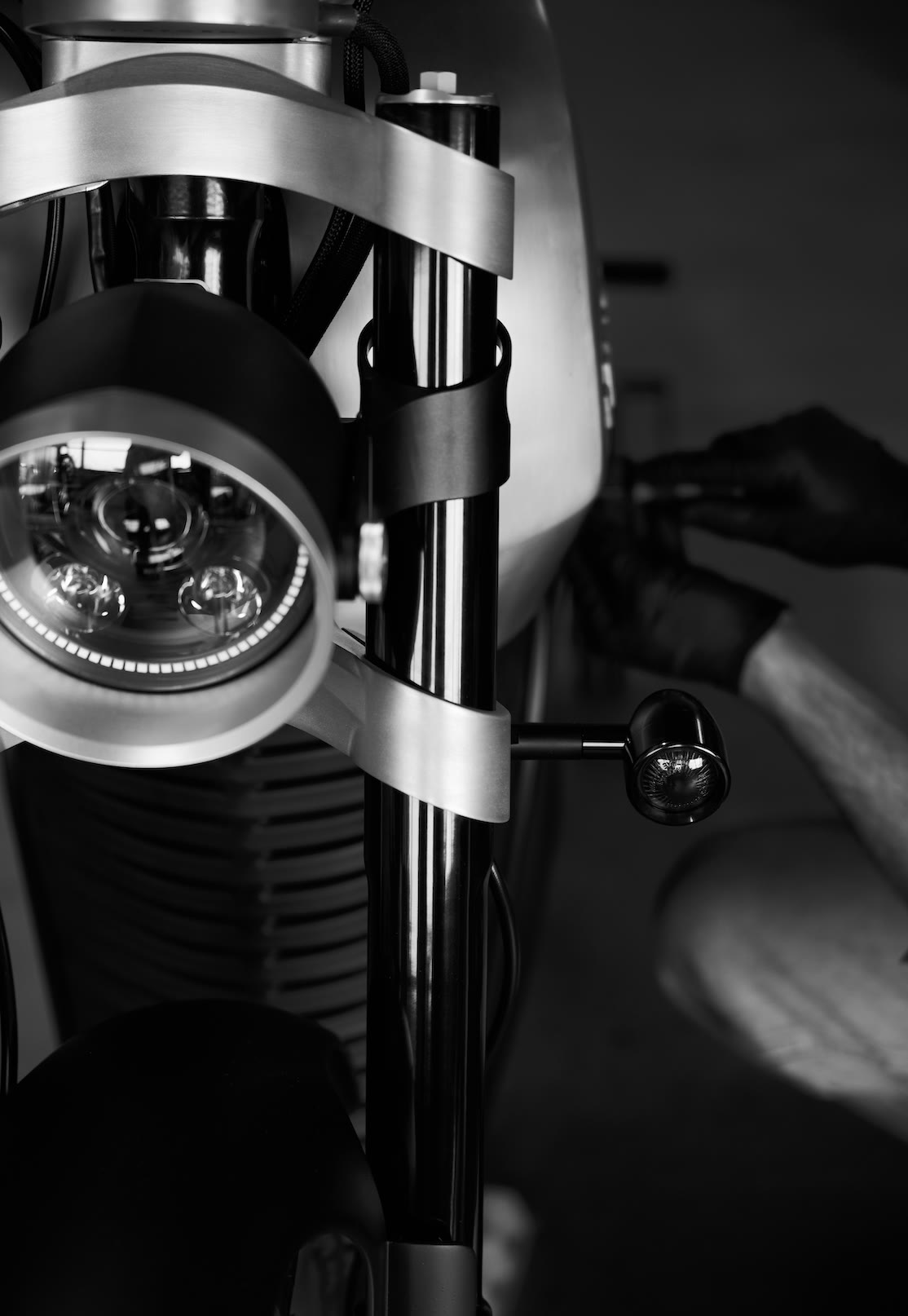
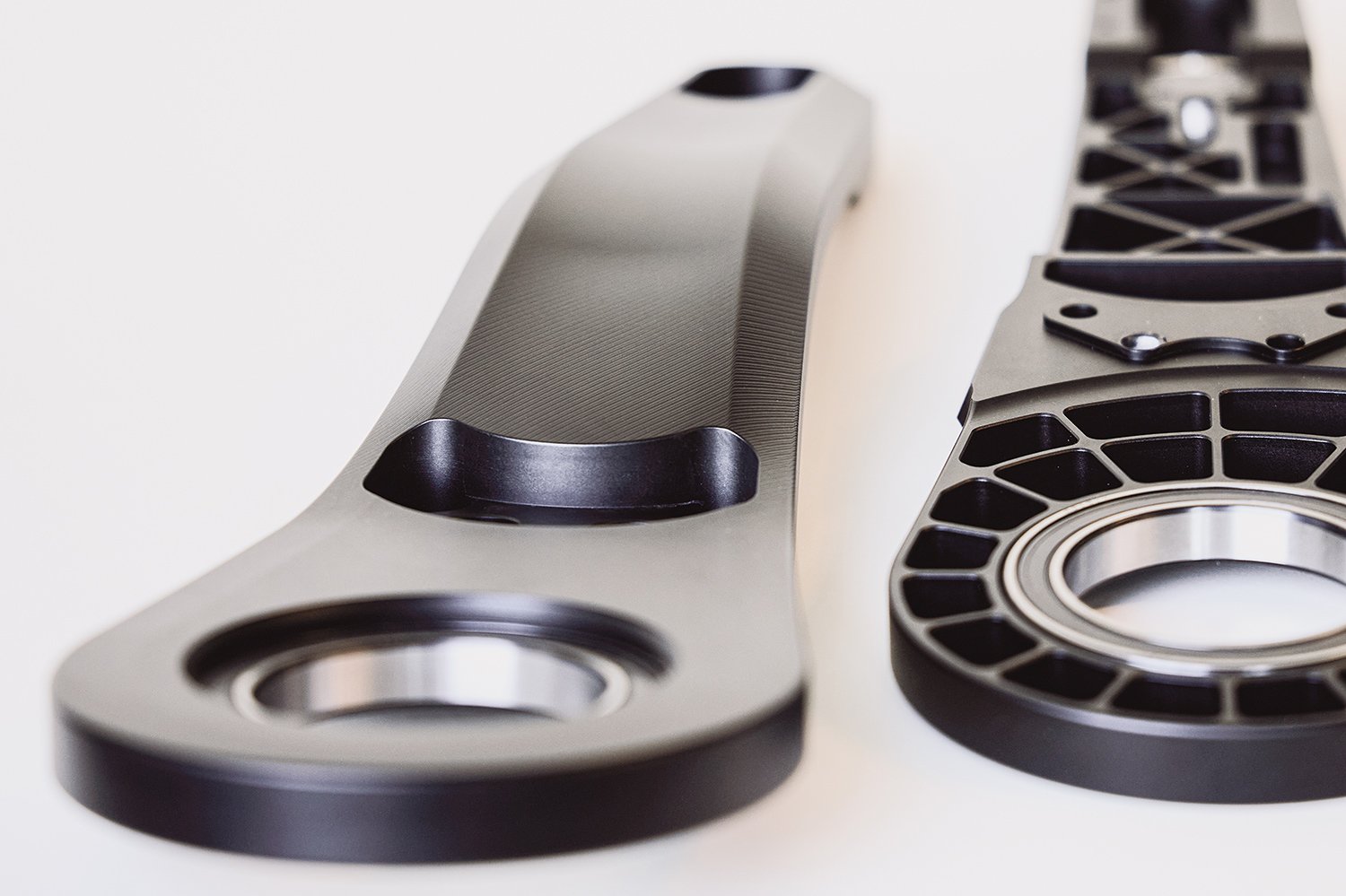
Standard limited warranty is 24 months, covering repair or replacement of defective parts at Tarform’s discretion. Wear and consumable items are excluded, as detailed in the full warranty.
The high-voltage battery is covered separately against capacity loss outside normal degradation. Full terms and conditions are in each bike’s warranty document.
Better after you buy it.
The way an electric motorcycle feels lives mostly in software: throttle mapping, regenerative braking, ride modes, the display itself.
We ship updates over the air, so the Tarform you ride in year three has improvements the day-one bike didn’t. Nothing to install; updates arrive on the display the next time you unlock the bike.
Designed for a longer life.
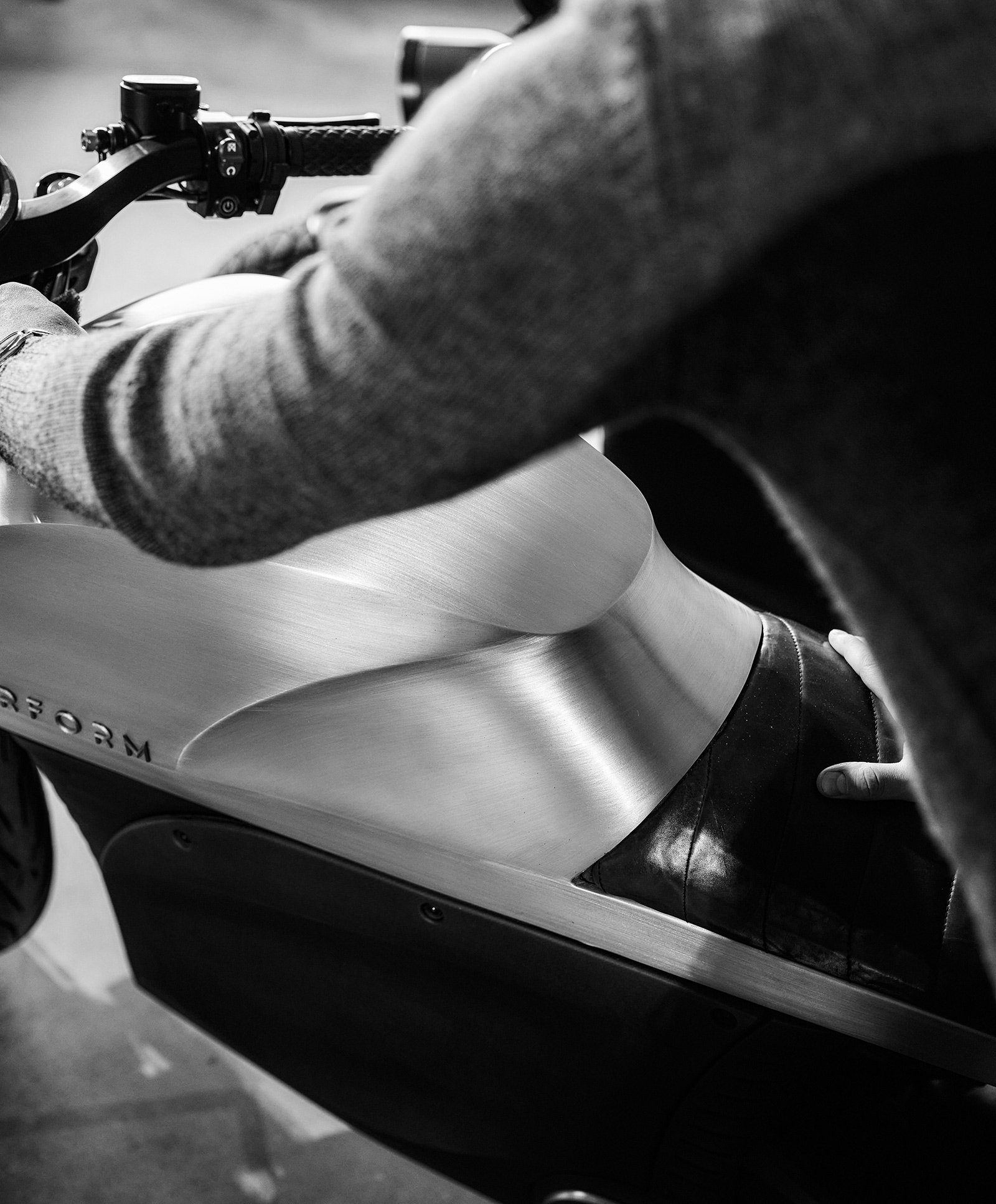
We don’t believe a motorcycle should become obsolete simply because the technology inside it evolves. Our approach is to design the physical architecture for a long life, and to treat the evolving electronic systems as distinct, serviceable parts.
What can last should last. What can change should be able to change.
- 01
The foundation
The chassis, structure and mechanical architecture are intended to remain useful for many years. These are the enduring elements of the motorcycle, the parts that give it its character and its proportions.
- 02
The energy
Battery technology continues to evolve. By designing the battery as a separate assembly from the chassis, we create opportunities for service, replacement, and future adaptation, subject, of course, to engineering and safety validation at the time of the work.
- 03
The intelligence
Motor controllers, battery management and vehicle electronics are approached as distinct systems with defined interfaces, reducing unnecessary dependencies between them. This is the part of the motorcycle that is most likely to improve over time, and we want it to be able to.
- 04
The care
A motorcycle’s longevity depends on more than its initial design. It depends on maintenance, available parts, technical knowledge, and continued support. We build the first; the rest we commit to over the life of the bike.
Engineering notes
The battery is structurally separate from the chassis. Battery chemistry and cell technology will continue to evolve, and we design our battery management and vehicle control architectures to minimize unnecessary dependencies where it is technically feasible to do so.
Drive systems are selected with adaptability and serviceability in mind, and individual components are designed to be replaceable where practical, rather than requiring replacement of a whole vehicle assembly. Modularity is always balanced against safety, reliability, performance and packaging.
We do not claim that every future battery, controller, BMS or drivetrain will automatically be compatible with existing motorcycles. Any such upgrade would require engineering and safety validation at the time. What we commit to is the intent of the architecture and the ongoing effort to support it.
Questions
Living with it
How far can I go on a charge?
About 100 miles in the city on either bike. On the highway at a steady 65 mph, expect 60–70 miles. Luna weighs 440 lbs and carries a 12 kWh battery; Vera is lighter at 370 lbs with an 8 kWh pack, so the usable range comes out close to the same. Both bikes are made for cities and the roads just outside them.
How do I charge it?
From an ordinary household outlet overnight, or from any public J1772 Level 2 charger for faster top-ups while you are out. Actual charge times depend on the bike and the battery state when you plug in.
I live in an apartment with no garage. Can I own one?
Often, yes. Owners charge from a ground-floor outlet, at work, or at a public charger nearby. Tell us where you live and we’ll tell you honestly whether it works.
Can I ride in the rain and in the cold?
Yes, in the rain. In the cold, range drops as it does for any battery. Store it charged between 20% and 95%.
Riding
Do I need a motorcycle license?
Yes. Both are full-size motorcycles and require a motorcycle license or endorsement where you live.
There is no clutch and no gears?
None. Direct belt drive. Twist and go.
Is a Tarform right for a newer rider?
Both bikes are built to feel approachable: low centres of gravity, balanced weight. Vera comes in at 370 lbs, Luna at 440 lbs. Both are quick, around 3.3 seconds 0–60. Come and sit on them.
Does it make a sound?
Yes, and it is real. Luna amplifies the electromagnetic pulse of its own motor; it isn’t synthesized. Vera carries a Tarform signature acoustic sound.
Service and longevity
What maintenance does it need?
Very little. Check the belt, brakes and tires as you would on any motorcycle. Software updates arrive over the air.
Who services it?
Every Tarform keeps a comprehensive log. We identify most issues remotely and resolve them over the air. When a part needs replacing, we source a local service provider and coordinate the work directly.
Can the motorcycle be serviced outside Tarform?
Yes, for a wide range of tasks. Routine mechanical work (brakes, suspension, tires, belt, lighting) can be performed by any qualified independent motorcycle technician.
Work on the high-voltage system, battery pack, motor controller and vehicle control electronics is handled by Tarform or by service partners we train and authorize. This is a safety requirement, not a commercial one.
What is the warranty?
24 months, repair or replacement of defective parts at Tarform’s discretion. Battery coverage applies when storage capacity drops below 70% of original.
Will it get better after I buy it?
Yes, over the air. Updates arrive on the display; nothing to install.
Longevity and ownership
Will my Tarform become obsolete as battery technology improves?
Our approach is to design the motorcycle with longevity and adaptability in mind. By keeping major systems distinct where it is practical to do so, we aim to make maintenance, replacement, and future adaptation more feasible.
Whether a specific future technology ends up being compatible will depend on engineering and safety validation at the time. The intent of the architecture is to leave that door open rather than to close it.
Can the battery be replaced?
Yes. The battery is a serviceable assembly designed to be separable from the chassis. Pack-level service and, where needed, pack replacement is handled by Tarform or by authorized service partners, using the specific pack validated for your motorcycle.
Replacement with a newer or different pack would be subject to engineering validation at the time of the work.
What happens if an electronic component fails?
Each major electronic system (motor controller, battery management, instrument display, and the broader vehicle electronics) is designed as a distinct module with defined interfaces. In most cases a failure is isolated to a single assembly, which is diagnosed over the air or at a service appointment and replaced on its own, rather than requiring replacement of a larger block of the motorcycle.
Will future batteries or electronics be compatible with my motorcycle?
The architecture is designed with adaptability in mind. We can’t promise automatic compatibility with any specific future technology; any such upgrade would require engineering and safety validation at the time. The intent of the design is to make that path possible rather than foreclosed.
Will Tarform motorcycles hold their value?
Resale prices depend on market demand, condition, age, and many factors we can’t predict. We don’t make resale claims. What we focus on is building motorcycles people want to keep, with an architecture that supports long-term use. The rest is for the market to decide.
How long will the battery last?
The battery is a component, not the bike. It is designed to be serviced and, eventually, replaced. Capacity will degrade over time at a rate that depends on how the motorcycle is used, charged and stored. Our warranty covers capacity loss outside normal degradation during the warranty period; the full terms are in each bike’s warranty document.
How does Tarform approach sustainability?
We treat the useful life of the motorcycle as the central question. Materials and emissions matter, and biomaterials and recycled metals are part of our approach, but the more consequential decision is whether a motorcycle is designed to be repaired and kept, or designed to be replaced.
Extending the useful life of a well-made machine, through serviceability, available parts, and continued support, is one of the more meaningful contributions a motorcycle company can make.
Visiting
Is it street-legal in the US?
DOT and EPA certified.
Do you sell outside the US?
Yes. We ship worldwide. Buyers outside the US are responsible for their local import and registration for a US-homologated electric motorcycle.
Can I see or ride one first?
Test rides are offered by appointment only, at our studio in Red Hook. Enquire about a visit.